
Research, Education & Innovation
Inspiring glass spaces for people
Glass environments bring together research, education, and public engagement in one flexible, high-performance space. By combining daylight, climate control, and modular design, they support innovation while creating inspiring environments for people and plants.
Built for Performance:
When evaluating a glass construction, focus on lifecycle performance, not initial build costs. The real value lies in future-proof investments with predictable operational costs.
- Low maintenance: Glass and aluminium require minimal upkeep;
- Adaptability: Modular systems can be expanded, relocated, or repurposed
- Long lifespan: High-quality materials retain performance over decades
- Energy savings: Daylight reduces reliance on artificial lighting
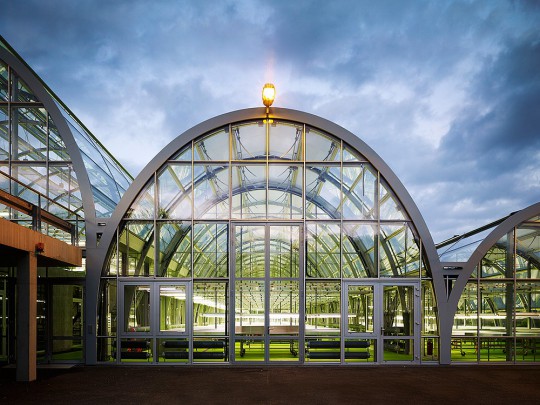
Climate Resilience Under Glass
A well-designed glass structure creates a controlled indoor climate while maintaining a strong connection to the outside world. Advanced glazing, ventilation systems, and screening solutions ensure:
- Protection from wind, rain, and extreme weather
- Precise control of temperature, humidity, and airflow
- Optimised growing conditions for plants and crops
- Comfortable environments for users year-round
Glass captures solar energy and converts it into heat, making even winter sunlight a valuable resource.
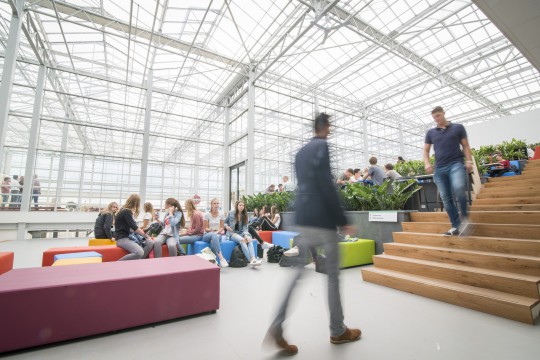
Plant Health vs. Visitor Experience
In environments where research, education, and public access intersect, balance is key.
- For plants: Stable climate conditions, optimal light levels, and hygiene are essential
- For visitors: Transparency, spatial experience, and comfort define engagement
Through intelligent zoning, climate compartments, and shading strategies, both objectives can coexist without compromise. Daylight plays a crucial role here, enhancing plant growth while improving human wellbeing, concentration, and mood.
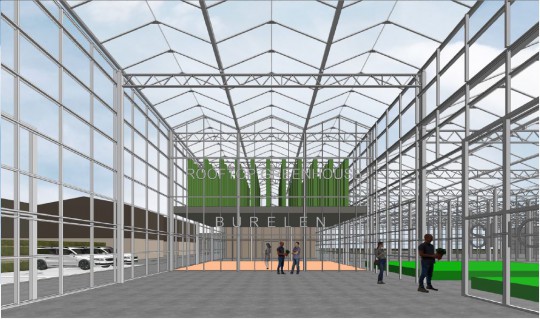
Integrating Energy Systems from Day One
Energy efficiency is most effective when embedded in the design phase. Glass constructions offer unique opportunities to integrate sustainable systems early:
- Use of solar gain as a natural heat source
- Integration with geothermal, heat storage, or residual heat systems
- Smart climate control and automation
- Optimised insulation and energy flows
This approach ensures a highly efficient, low-energy indoor climate aligned with long-term sustainability goals.
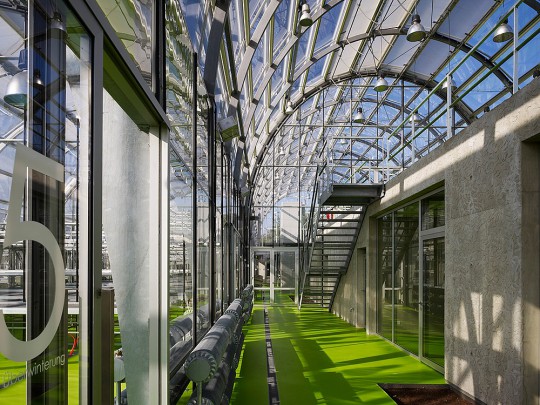
Hygienic, Sustainable, and Flexible by Design
Glass buildings meet the highest standards for research and public environments:
- Hygienic surfaces: Easy to clean and maintain;
- Sustainable materials: Produced with minimal waste and fully reusable;
- Custom design: Glass can be curved, cut, and engineered to fit any concept;
- Future adaptability: Structures can evolve with changing needs
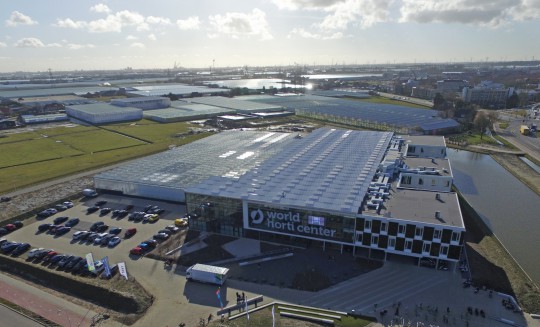
Proven in Practice
- Goethe University Campus Riedberg; advanced research with precise climate control;
- The World Horti Center - research, education, and business in one dynamic environment;
- Campus Science & Green at PTI Kortrijk - glass construction for education, research and horticulture
- And many more, like The Clore Learning zone at RHS Garden Wisley and the plant propagation glasshouse at Inverewe.
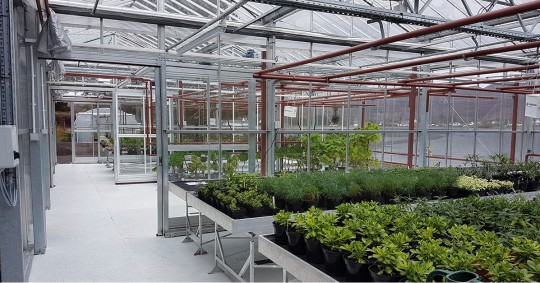
Botanical greenhouses: learning comes to life
Valuable plant collections become inspiring learning environments. In botanical greenhouses, visitors, students and researchers can discover rare and endangered species in an unforgettable setting. Carefully controlled climate zones ensure the right conditions, both for the health of the plants and for the comfort of visitors.
Discover our botanical greenhouses
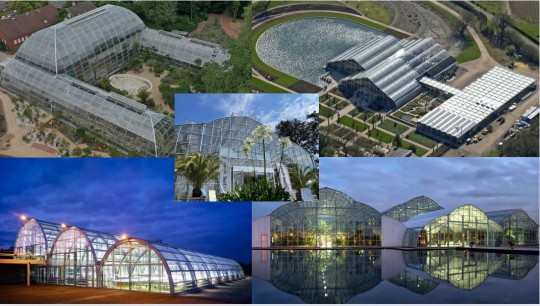
A Future-Ready Environment for Innovation
Glass constructions uniquely combine efficiency, flexibility, and experience.
Whether for universities, research institutes, or botanical gardens, they offer a scalable solution that supports both scientific progress and human wellbeing.
We guide projects from concept to realization, ensuring your glass environment performs today and adapts to tomorrow.